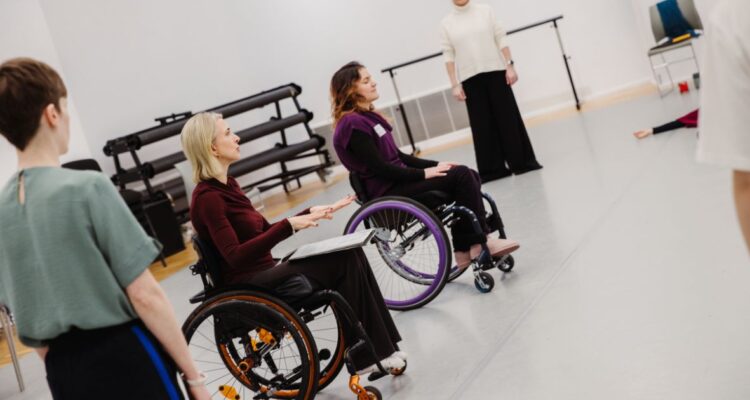
In January, the first meeting of the Access Ballet Collective (ABC), hosted by Birmingham Royal Ballet, brought together organisations and Disabled artists united by a shared purpose: to ensure that ballet evolves in ways that are equitable, collaborative and open to all. What emerged was not simply discussion, but a collective commitment to action - and a growing momentum that signals real change ahead. Here our Co-Artistic Director, Laura Jones, who attended the event, shares her reflections.
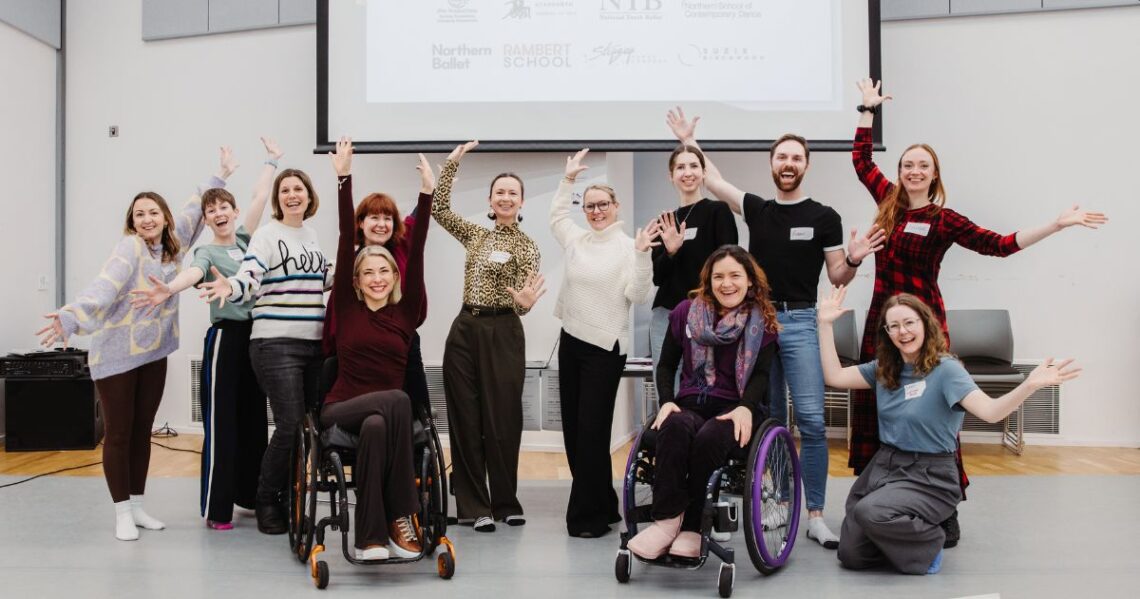
A group photo of the attending members for the ABC, standing, sitting in wheelchairs or kneeling on the floor in a dance studio. Everyone smiles brightly with arms stretched wide in a moment of celebration. Photo by Maria Polodeanu, courtesy of Birmingham Royal Ballet.
In January, I had the pleasure of attending the launch of the Access Ballet Collective (ABC) hosted by Birmingham Royal Ballet. Representatives from a range of ballet companies and training organisations, alongside freelance dancers with lived experience of disability, came together to build on a shared commitment: advancing access and inclusion within the ballet sector.
It was inspiring to be part of such a positive and forward-thinking event. There was a real sense of hunger for change – a readiness to drive the next evolution of ballet
A Pivotal Moment for Ballet
There is a monumental shift waiting to happen.
The appetite in the room was palpable. Representatives shared a common commitment to strengthening and enhancing the already groundbreaking work taking place across the sector. This wasn’t about starting from scratch. Many companies and organisations are already weaving access and inclusion into their practice in meaningful and creative ways.
But we recognise that there is more to do.
By creating space to identify and unpick challenges and barriers – while also celebrating successes – we are building a deeper understanding of how we can work together. Collaboration is key. Together, we can strengthen equity and access for Disabled dancers in the world of ballet.
Access is not simply a consideration for outreach or participation initiatives. It is not an “add-on.” It is a vital step in ensuring ballet remains vibrant, relevant and reflective of the world we live in today.
Honouring Tradition, Unlocking Potential
Ballet is an artform with a rich history and a beautifully codified language. Our aim is not to dismantle that legacy, but to unlock it – to open it up to a wider community, from participants to professionals.
Difference is a natural part of human existence. It is something to be celebrated.
As a child, I enjoyed the privilege of learning ballet. At 16, I acquired a disability and became a wheelchair user. At that time, it meant giving up ballet and the other dance forms I had grown up with, and taking a new direction in contemporary dance.
I am deeply grateful for the opportunities that inclusive contemporary dance has given me. But I look forward to the day when a young Disabled dancer does not have their options limited by other people’s assumptions about what ballet is – and who it is for.
Amplifying the Voice of Disabled Dancers
One of the most powerful elements of the ABC launch was the presence and leadership of Disabled dancers in the room. Their voices were not peripheral; they were central. Lived experience shaped the conversation, grounded the ambition, and sparked new possibilities.
This is how meaningful change happens – through shared leadership, sustained dialogue and collective action.
The ABC launch marked not just a meeting of minds, but a commitment to action. Together, we are ready to enhance and strengthen the groundbreaking work already underway — and to ensure that access is embedded at every level of ballet training, creation and performance.
The next evolution of ballet is not about replacing its foundations. It is about expanding them.
And the momentum has already begun.