In November, we said farewell to our second cohort of Future Leaders, wishing Will Spencer and Kasja Sundström, who joined us as Co-Assistant Artistic Directors, all the best with their next steps. Will shares with us his reflections on a year with the Stopgap and the programme.
As my time as Assistant Artistic Director at Stopgap Dance Company comes to an end, I’ve been reflecting on what the past year has taught me, not just about leadership, but about myself and where I belong within the arts sector as a disabled creative.
I entered Future Leaders as a choreographer with ambitions of becoming an Artistic Director. I leave with a much broader understanding of what leadership can look like, a greater appreciation of governance, strategy and organisational structures, and perhaps most importantly, the confidence to recognise myself as a leader already.
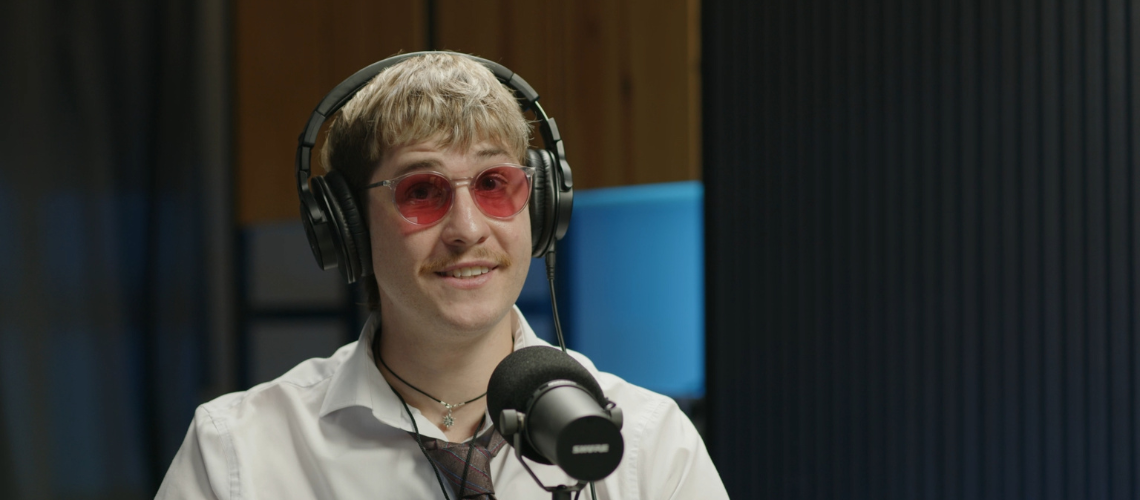
Will, a white male-presenting person, during recording for the Future Leaders podcast 'Lenses on Leadership'. Will wears red tinted glasses and large black over-ear headphones, and speaks into a microphone.
Key Learnings
One of my biggest discoveries has been recognising how much of my existing practice extends beyond choreography and direction into producing, teaching, advocacy, strategy and organisational leadership. How important structures and accessibility outside of the studio can affect the workings inside, and extend through this into performances and classes.
Working alongside Lucy Bennett and the wider Stopgap team has helped me understand how artistic decisions intersect with policy, governance and the everyday realities of running an arts organisation.
My mentorship with Lucy has been particularly valuable. Rather than simply learning from someone more experienced, I’ve felt respected as a peer, with opportunities for reciprocal learning and sharing our different approaches.
I’ve also had to navigate the challenges of leadership as a disabled artist, particularly balancing access needs with professional expectations, managing feedback and recognising when rest is just as important as the work itself. This is something I have always struggled with and Stopgap has given me a much wider understanding of my own access alongside access for others.
Perhaps the greatest learning has been that leadership doesn’t require me to become someone different. It’s about recognising the skills I already possess and having the confidence to use them, and hone them.
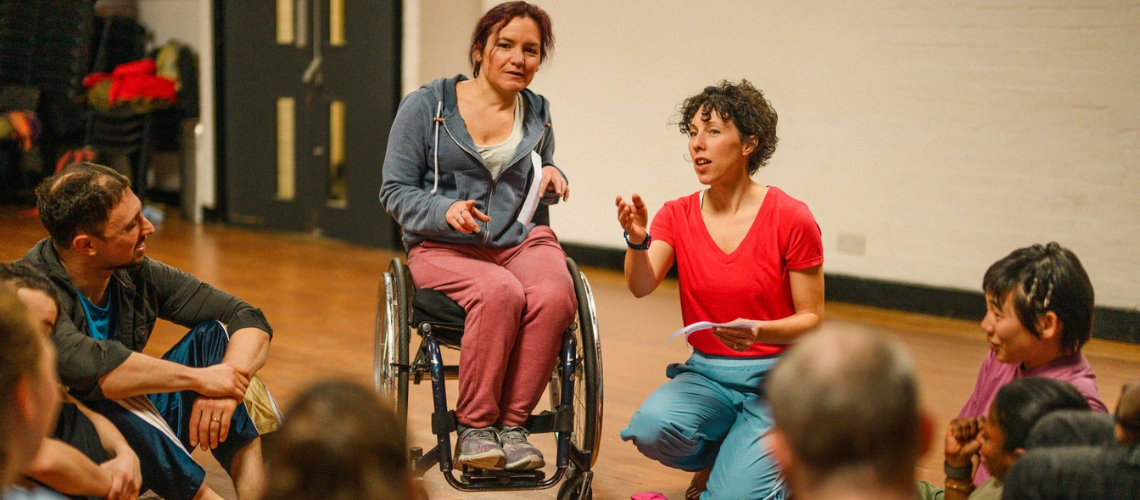
Stopgap's Co-Artistic Directors Laura Jones and Lucy Bennett.
Projects and Milestones
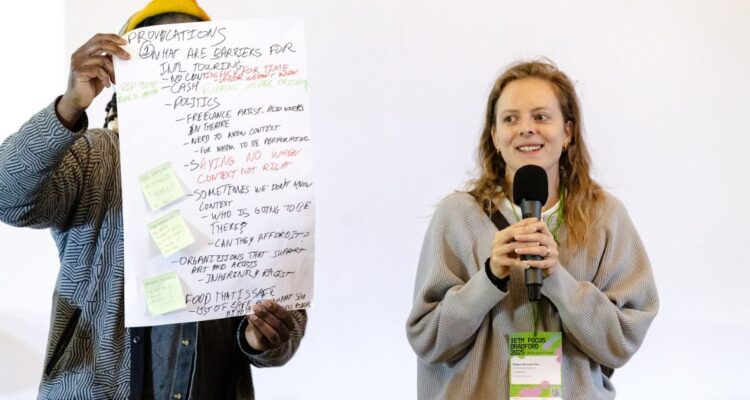
There have been so many highlights, from attending the IETM conference in Bradford and touring with RO-TES-រទេះ and Lived Fiction, to teaching company class and observing other artistic leaders and companies along the way.
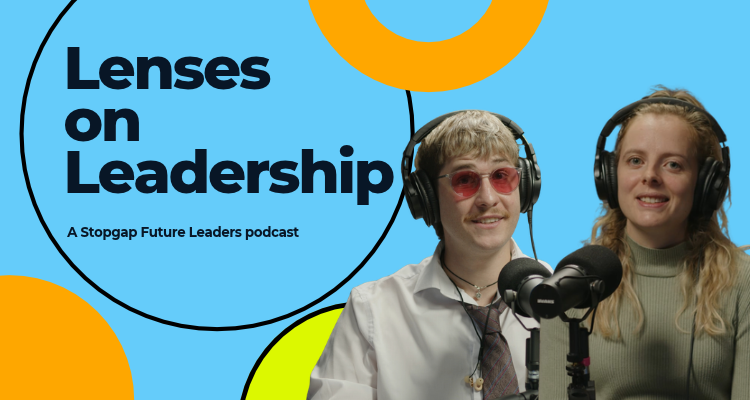
Developing Lenses on Leadership, our podcast exploring diverse approaches to leadership, has been another major milestone. The project has allowed us to connect with inspiring figures across the industry and create a resource that will continue beyond our time at Stopgap.
I’ve also achieved or exceeded almost all the goals I set at the beginning of the programme. These include interviewing for boards, gathering evidence of how neurodivergent-informed rehearsal practices can improve working environments within commercial musical theatre, and writing guidelines for best practice for visiting choreographers. The resulting guidelines and learnings have since been shared with several theatres, organisations and dance companies.
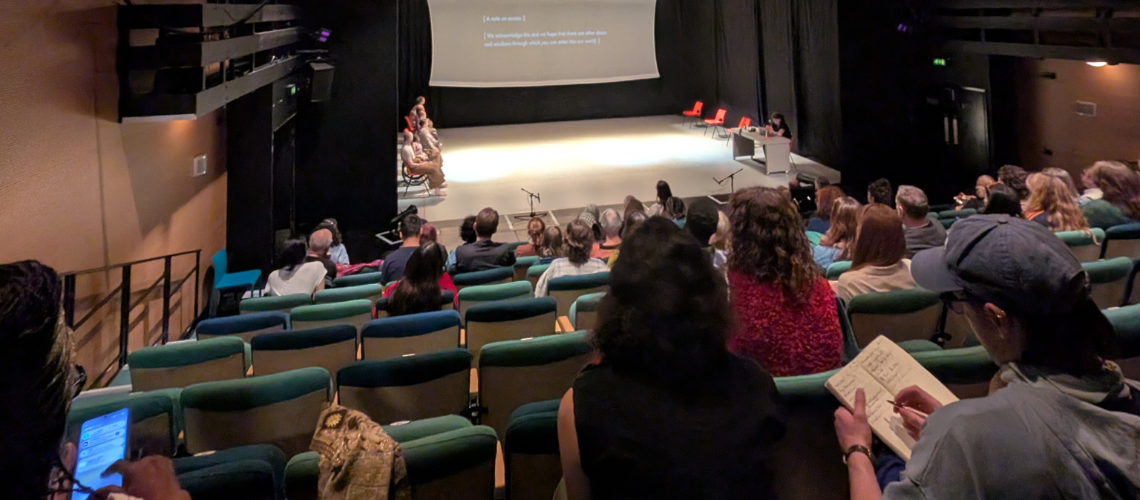
Will making notes during a show of Lived Fiction.
What comes next?
Future Leaders has expanded my ambitions beyond becoming an Artistic Director. I’m now considering roles across artistic programming, talent development, governance and policy, recognising how these areas can influence meaningful change across the sector, and help me achieve my final goal of bringing dance and theatre to all, in an accessible and meaningful way.
I’m also more aware of the barriers facing disabled leaders, facing me, how we can overcome these and the difficult conversations that need to be had to address inequalities. I’ve learned the importance of creating evidence, networks and opportunities that challenge existing assumptions, for both myself and others.
While progressing from mid-scale to larger-scale opportunities remains a challenge, I leave Stopgap with stronger networks, greater resilience and a clearer understanding of the contribution I want to make. I am resilient, refreshed and ready.
Above all, this year has confirmed something important, I don’t need to wait for permission or a particular job title to consider myself a leader.