
At the end of May, Stopgap travelled to Tbilisi, Georgia, for the first phase of Bodies in Motion – a new collaboration with InForm, a platform dedicated to the development of inclusive performing arts. Co-Creative Director Lucy Bennett and Senior Dance Artist Nadenh Poan led a five-day intensive workshop, co-facilitated by InForm artists Davit Khorbaladze, Iakob Gogotishvili and Maka Chkhaidze, working with a group of disabled and non-disabled participants from across the city. The week concluded with a public sharing of a new piece, First Light, performed for an invited audience of family, friends, and the wider community.
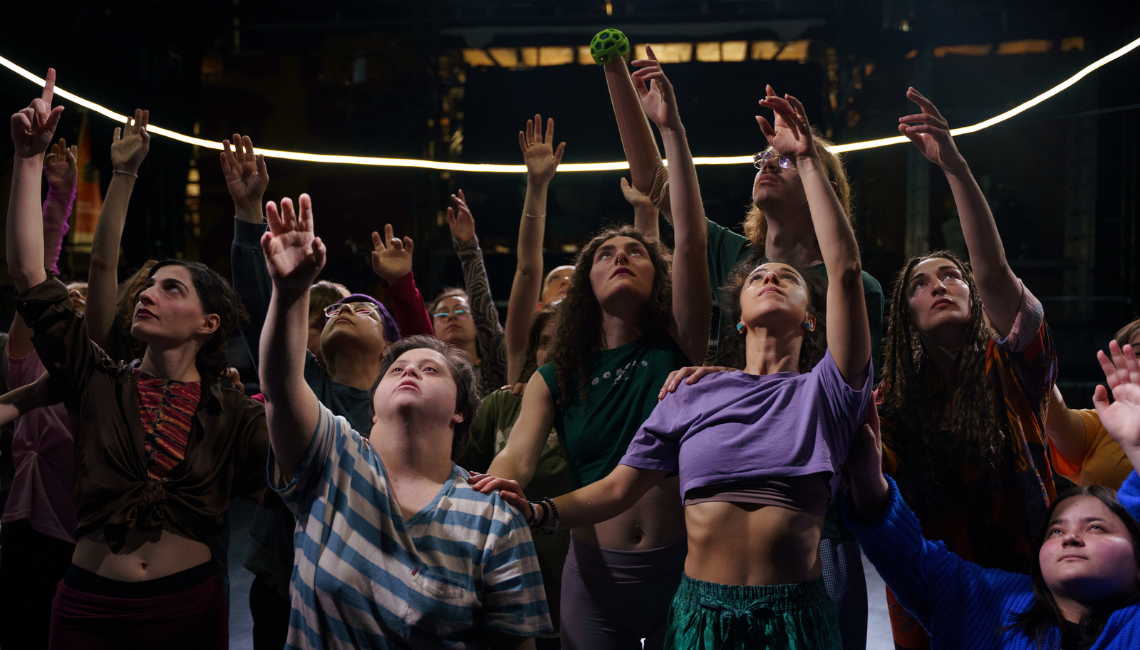
A group of disabled and non-disabled dancers reaches together to the sky, their eyes following their hands and limbs to look upwards.
Building the group
Participants were recruited by an open call, run by InForm around a month before the workshop, which drew more than 40 applications, a significant response given the limited visibility of inclusive arts initiatives in Georgia. From these applications, 22 participants were selected to join the intensive. The group’s experience ranged widely: some had professional dance backgrounds, and others had never taken part in a dance workshop of any kind before. Several participants described the diversity of the group itself as rare in the Georgian context. Encountering diversity in practice, rather than as an abstract idea, was really significant for a lot of the group. One dancer described the group as feeling “like one family,” while another reflected that the week had shown how easily people can live, work, and create together when given the right conditions.
Holding a group like that together, Nadenh said, is “really nice, but at the same time it’s a challenge”. Nadenh explains that it is not because people couldn’t do the work, but because everyone moves at a different pace and needs different things. Experienced in drawing together a wide variety of tempos and needs, Nadenh and Lucy spent time creating a sense of harmony in the group by introducing the idea of an access agreement, where we share what will help us work together in the space. For some people, particularly neurodivergent participants, it was the first time they had been in a creative environment where individual access needs were raised and accommodated without judgement, rather than treated as an exception to the process. Several non-disabled participants also spoke about arriving uncertain of how to interact with disabled participants, having had little previous experience – but that uncertainty gave way to more direct, confident relationships over the course of the week. Nadenh shares, “Eventually, at the end, our journeys merged together, and brought about this beautiful piece that Lucy and I were so pleased about.”
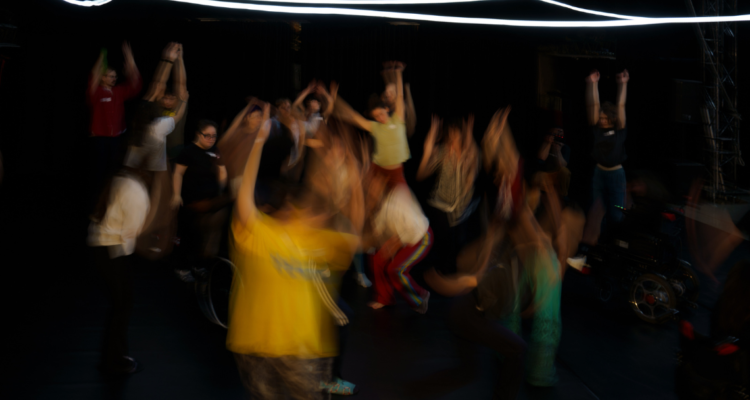
A blur of bodies in motion.
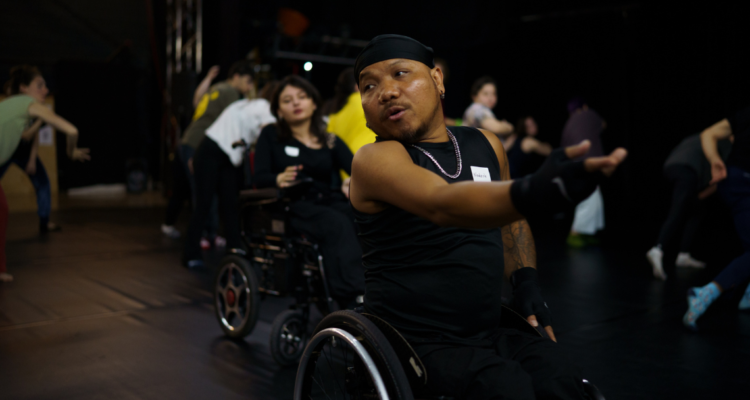
Nadenh sharing movement in morning class.
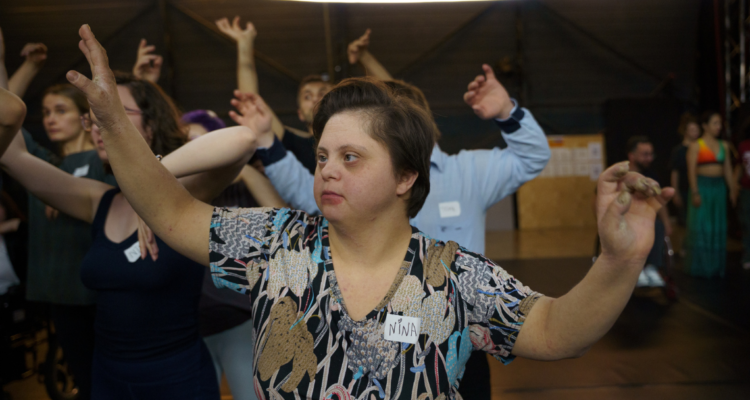
Nina, a disabled dancer, stretches their arms out to the side.
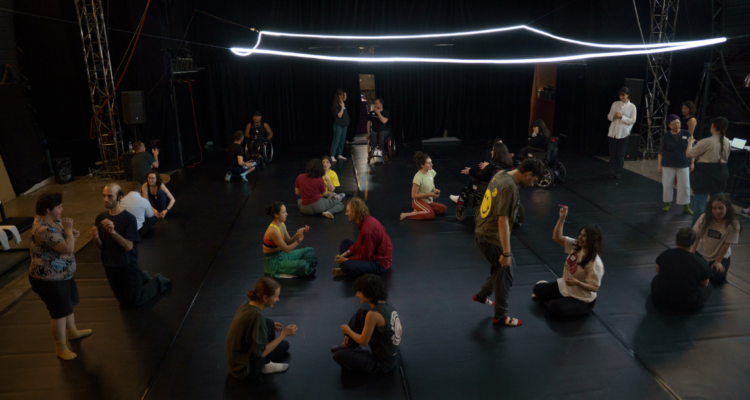
Pairs of dancers in focussed conversation.
The Process
With participants ranging from professional dancers to complete beginners, the first real barrier was language. Most participants spoke some English, but as Lucy and Nadenh don’t speak any Georgian, it was important to work with support, so a translator moved constantly between the full group and, once the group split into smaller sections, back and forth between each one: “It worked, but it just takes time” says Nadenh. Beyond language, there was the simple fact that everybody’s body moves differently. “People represent movement in their own way. Some people take a bit longer, some people quicker. We help each other during the process, and what an inclusive group need is time”.
Structuring the five days to work towards a public sharing meant careful pacing: Day one was for the group to get to know each other and try initial tasks; Days two and three for building material; Day four intended to complete the choreography, though the group ran over and continued into the morning of Day five before the sharing itself! Sharing more about the process of working towards First Light, Nadenh says scores (structured tasks giving performers room to interpret material rather than fixed steps to copy) were central to this process: “That’s really helpful, that Lucy pulled that out.” It gave the group opportunities to move in the ways that were comfortable to them whilst moving together with others in a shared framework.
Reflecting on what he personally learned from leading the process, Nadenh pointed to energy and pacing: “My motivation is to keep my energy running smoothly and strong, not showing off, but strong enough to deliver the right thing, so people can understand what we’re looking for.” Getting to know each participant individually, he said, was central to that: “The more we get to know them, the happier we feel, and when we’re happy, we create work that’s a bit more beautiful.” Nadenh was also pleased to share clips from his new outdoor choreography RO-TES-រទេះ, explaining to the group about his recycled and adapted wheelchair and the process of creating a work with integrated audio description. The group then explored a task from RO-TES-រទេះ which built a section in the work called ‘The Long Spine’, dancers connect in a long line and the movement ripples from the dancer at the front. It builds a tactile connection and each dancer listens through their palm to the person in front, echoing their motion in their own body.
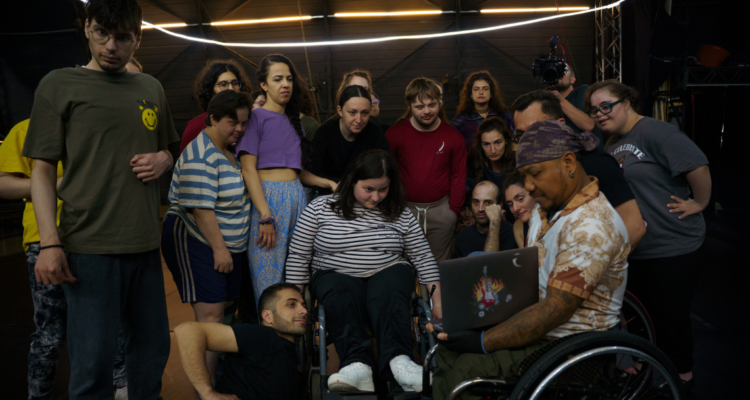
Nadenh sharing a video of RO-TES with the group.
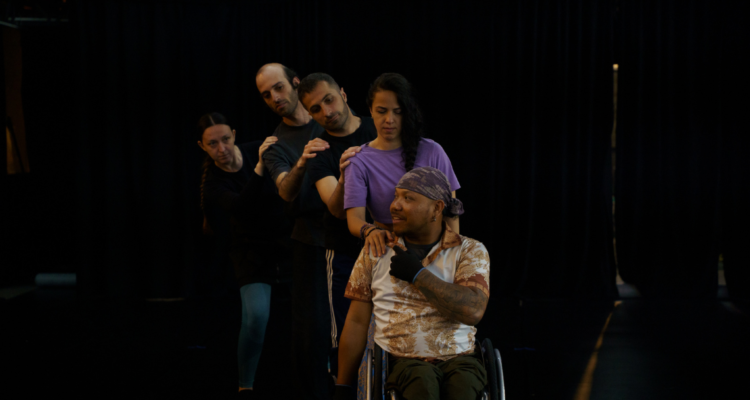
Nadenh sharing a creative task from the RO-TES section titled 'The Long Spine'.
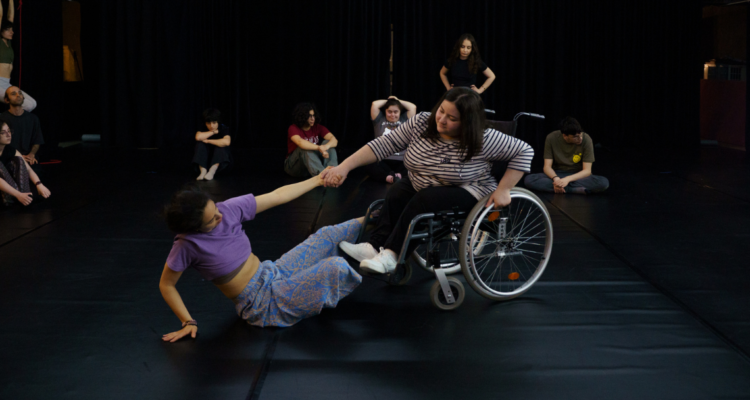
Dancers exploring contact work.
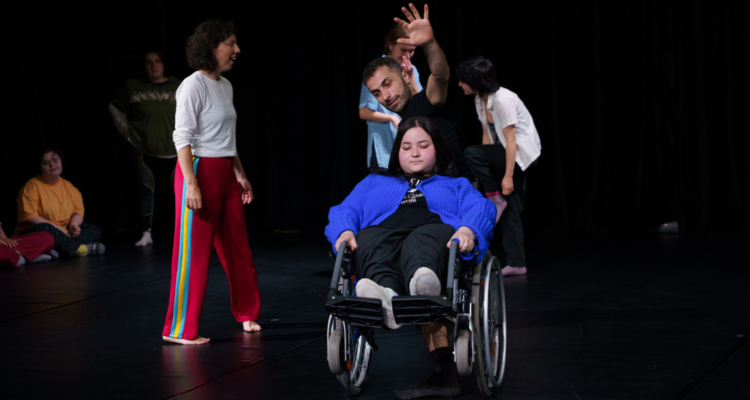
Two dancers explore contact dance principles of sharing weight.
One dancer reflected that she had lost touch with her body many years earlier, and that the workshop had helped her begin rebuilding that relationship. Others described discovering new physical possibilities and feeling more present, both in their bodies and in how they related to the rest of the group.
Maka, Founder and Director of InForm shared this reflection with us: “One participant told me: ‘It seems like we can actually live and work together very easily’. This sentence stayed with me. What can feel impossible from a distance became, through this workshop, both possible and desirable. I believe we now have more allies who truly see and believe in the idea of a harmonious, inclusive society”.
For Nadenh, moments like these sit at the heart of why Stopgap does this work in the first place: “The practice that we share with InForm is kind of like keeping hold of the community, that group, and being really important together. And then to share our practice, the way that we lead a class, the way that we create community choreography ideas. Also to represent Stopgap, because our goal is to share our message about inclusiveness, for others to get a chance to know what inclusive [practice] means to them.”
The intensive culminated in a sharing with friends, family and the local community.
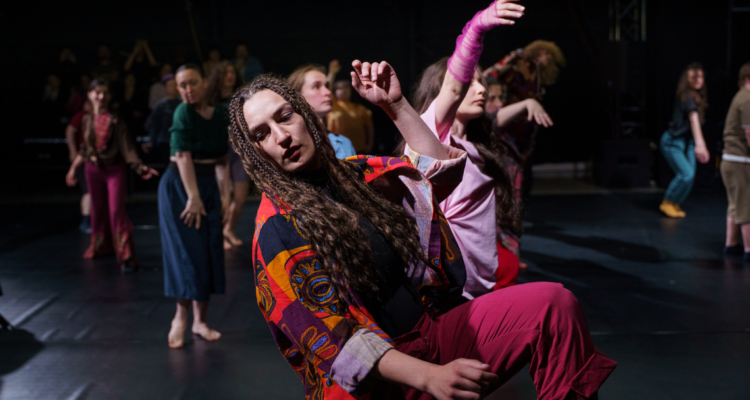
A dancer with long hair and colourful clothes leans back softly.
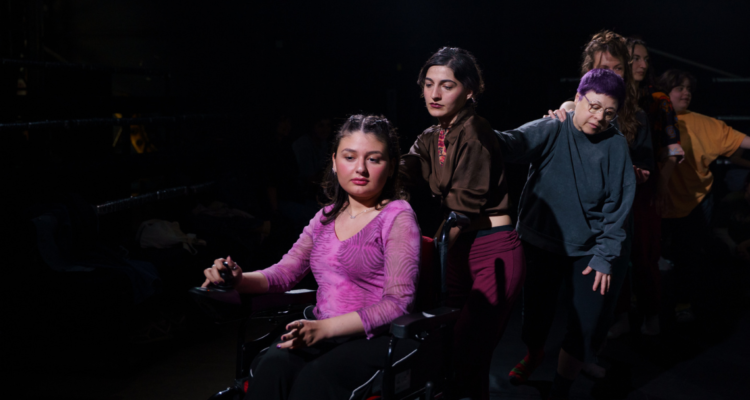
Dancers move in a line, connected by a hand to the shoulder of the person in front, a power wheelchair user leads.
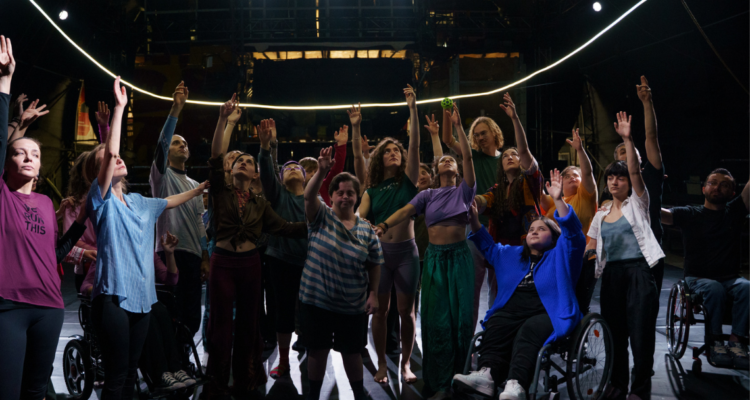
The whole group reaching up towards the sky.
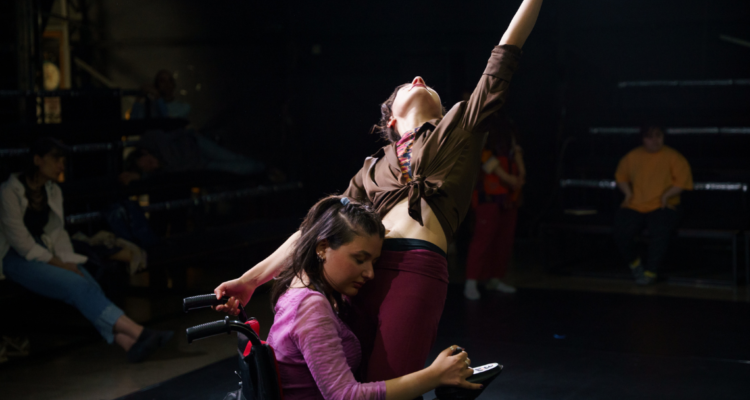
A quiet duet moment, one dancer reaches as the other curls into their torso.
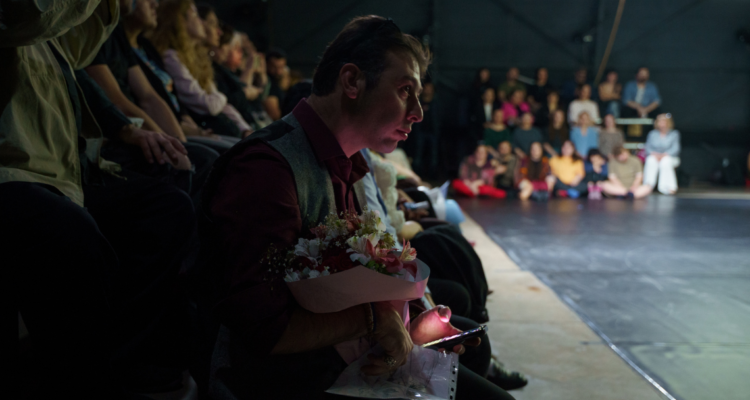
An audience member watches eagerly, holding a bunch of flowers.
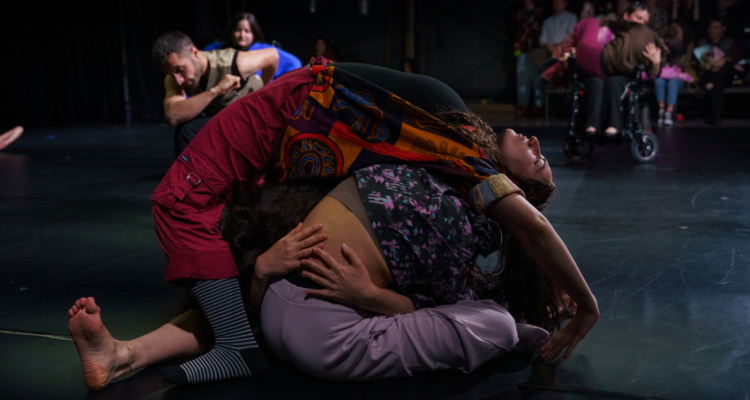
A tangled trio of bodies, unsure where one ends and the other begins, they layer on-top and around each other.
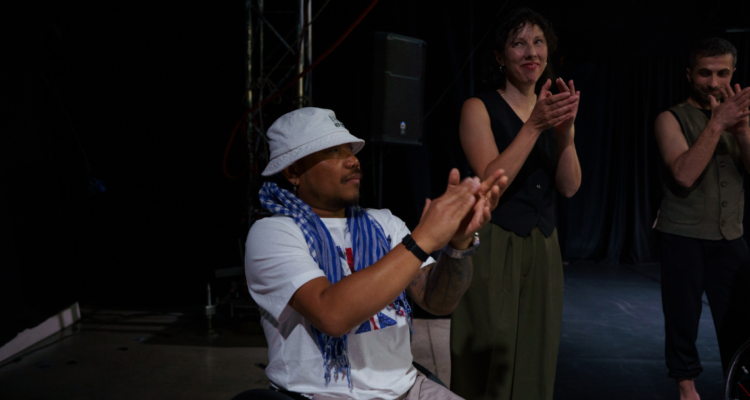
Nadenh and Lucy applauding the group.
Reclaiming Bodies in Motion sits alongside a growing thread of international exchange in Stopgap’s work. Alongside this project, Stopgap also runs Open Dialogo, a bilateral residency programme connecting Disabled and non-disabled dance artists in England and Italy, in its third year and heading into a fourth and final legacy building year. For Nadenh, projects like these matter because they let inclusive practice travel to places where it doesn’t yet have infrastructure to grow on its own: “It’s really important, as an inclusive company based in the UK, to share our practice to another side of the world.” For the wider dance industry, that exchange cuts both ways: it’s as much about UK companies learning from different cultural contexts, and different ways bodies and communities move together, as it is about sharing a model for working inclusively. As Nadenh says, “it is not just about Stopgap sharing what we know, we learn about their culture, the way everyone moves, the way they work, their journey.”
We’re looking forward to continuing our collaboration with InForm. A documentary film about the project is currently in progress, with a planned screening and performance of First Light hopefully taking place later this year.
This project is supported by the British Council’s Connections Through Culture Programme,
“The Connections Through Culture programme nurtures fresh cultural partnerships between the UK and select countries including Georgia. This programme supports new ideas and collaborations from artists and cultural organisations. Partnership between the Stopgap Dance Company and InForm:Platform for Inclusive Minds is the best opportunity to support and promote disability arts practice in Georgia and to connect Georgian arts practitioners with the excellence and expertise from the UK. I am grateful to each and everyone in this partnership for this brilliant initiative and for your artistic courage and resilience.”
Zaza Purtseladze, Country Director Georgia and Eastern Partnership Cluster Lead, British Council
All images by Giorgi Shengelia