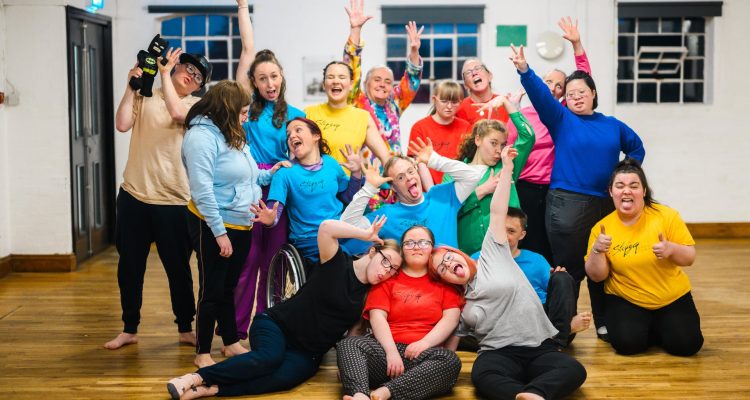
Stopgap has worked with the British Council many times over the years, touring to countries including Türkiye, Japan, Myanmar, Egypt, Algeria and Palestine.
This year, we were fortunate to be involved in two British Council projects abroad: one in Georgia and one in Thailand. Both were very different in their make-up and objectives, but each proved rewarding and rejuvenating for our team.
One of my favourite memories of working with the British Council, both as a performer and Assistant Artistic Director for Stopgap, was our tour of Eastern Europe, which included Romania, Bulgaria and Albania. We performed in schools and theatres, danced alongside professional Albanian dancers for the President of Albania, and even appeared on Albania’s version of Dancing with the Stars long before disabled dancers were featured on the UK programme.
At the time, Stopgap’s Co-Artistic Director Laura Jones was performing with the company and became something of an overnight celebrity. Her popularity was so great that we struggled to get through the airport without people stopping for autographs or wanting to share their greetings and appreciation.
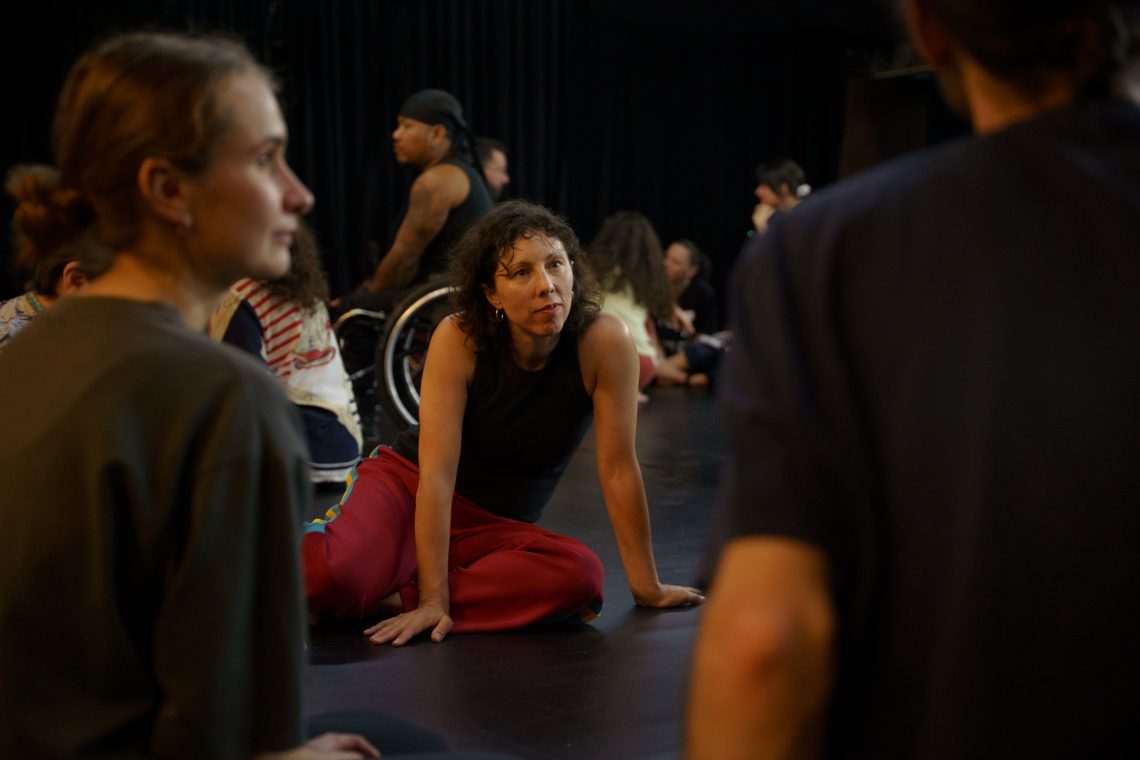
Lucy, a white non-disabled woman with curly shoulder length black hair, sits and listens to a conversation in a busy studio as part of a workshop in Georgia.
Georgia: New Connections and New Possibilities
In the spring, I travelled to Georgia with Senior Dance Artist and choreographer Nadenh Poan to work with the incredible and progressive arts organisation In-Form. Together, we collaborated with their leadership team to engage Disabled and non-disabled community dancers of all ages, with the aim of creating a small sharing for family and friends.
Georgia, and the people we met there, were beautiful inside and out. Although the city itself presented many accessibility challenges, a group of nearly thirty dancers joined us every day for four days. They arrived with open hearts and a genuine curiosity to learn from us.
We shared as much as we could, but throughout the process our thoughts were on the final sharing that would emerge. There was never any pressure to perform. However, Nadenh and I have learned that when people who have historically been marginalised and excluded from cultural experiences are given an opportunity, they seize it wholeheartedly. Often, they stun their communities with stories and perspectives that have not previously been shared.
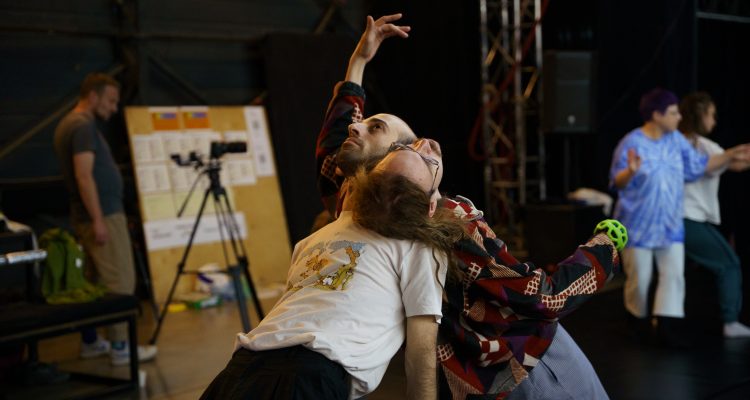
Two dancers stand back to back and lean in, one dancer lays their head back onto the shoulder of their partner.
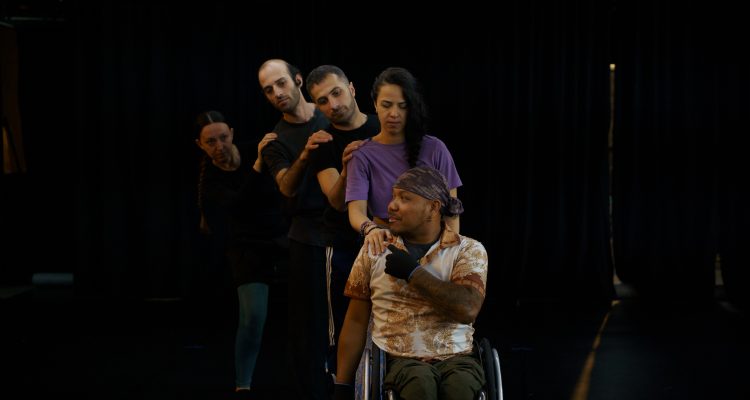
Wheelchair dancer Nadenh is at the front of a line of dancers, they stand behind him in a line, each with their right hand on the shoulder of the person in front, the dancers peer out so they can see what Nadenh is doing.
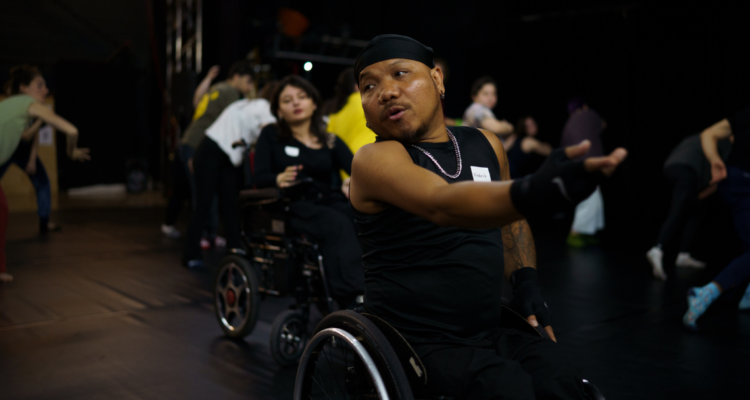
Nadenh sharing movement in morning class, he holds out his right arm and looks slightly over his shoulder.
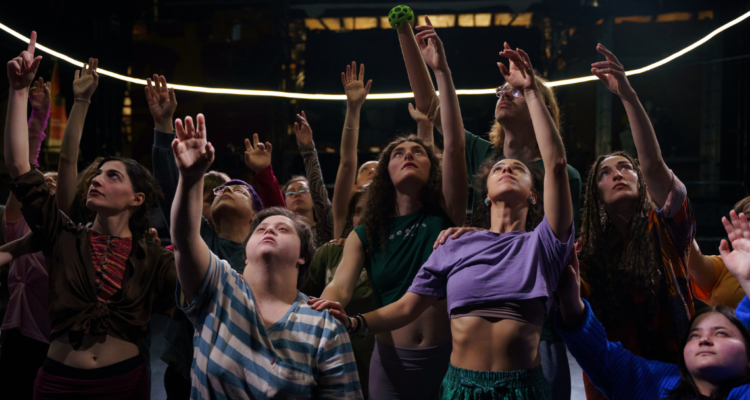
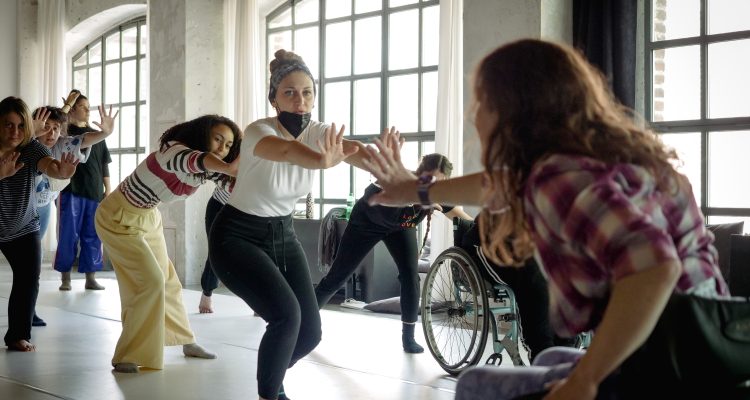
A group of disabled and non-disabled dancers reaches together to the sky, their eyes following their hands and limbs to look upwards.
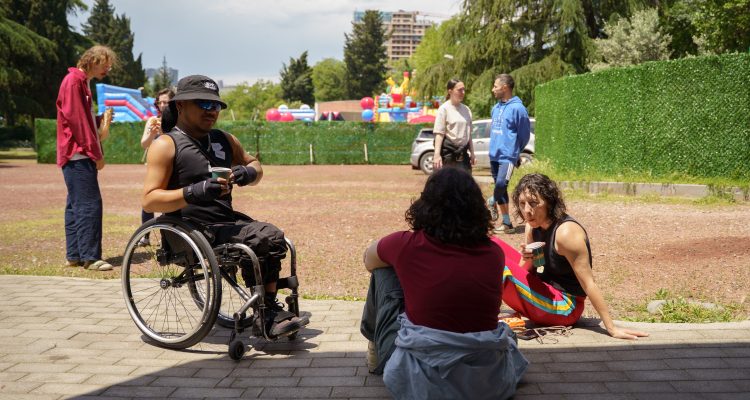
Nadenh and Lucy outside in conversation with a workshop member.
Of course, the Georgian dancers wanted to perform, and their families and friends turned out in force to witness their expression and creativity. New relationships were formed, perspectives shifted, and without doubt new ambitions, ideas and even careers began to take shape.
Whenever Stopgap travels to work with an inclusive group of artists, whether they are meeting for the first time or have been moving together for years, there is always a sense of familiarity. It feels as though we know each other somehow – like distant relatives recognising each other.
The inclusive dance community across the world is often united by shared values, similar approaches to practice and unfortunately many of the same barriers created by systemic ableism. Travelling internationally reminds us not only of those challenges, but also of how fortunate we are to work within an arts culture that increasingly acknowledges and seeks out the contribution of Disabled-led and Disability-centred art and of course this is the aspect that British Council wants most to share.
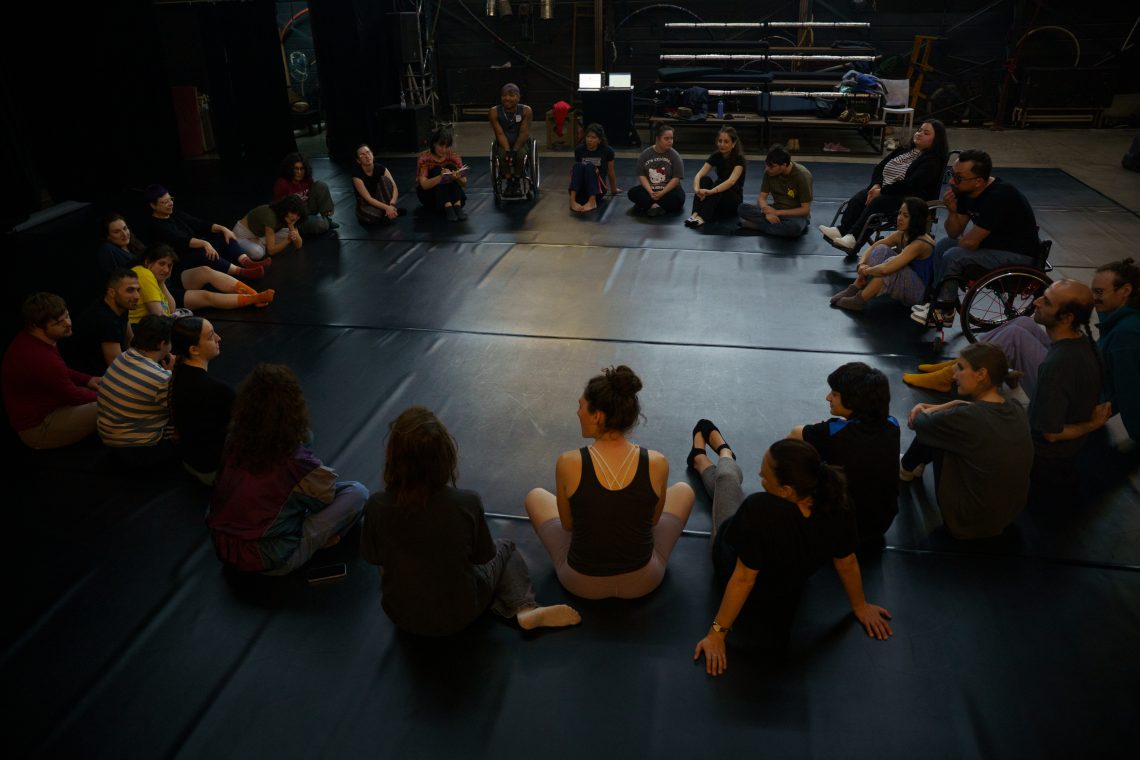
In a large studio space with a black dance floor, a large group of disabled and non-disabled dancers sit in a circle.
Thailand: Reimagining FROCK as FROLIC
Our trip to Thailand saw me joined by Senior Artist Hannah Sampson and Rehearsal Director, and former Stopgap dancer, Amy Butler. As part of BICT Fest, a festival for children and families, Stopgap was commissioned to reimagine our successful outdoor show FROCK for young audiences.
Working alongside professional Thai dancers, myself with Hannah and Amy collaborated to create FROLIC, a playful and light-hearted performance that celebrated difference while gently questioning changing gender roles of the past.
The cast included one Blind, one visually impaired performer, one performer with Down syndrome and two non-disabled dancers. It was wonderful to see an audience that reflected the same diversity represented on stage.
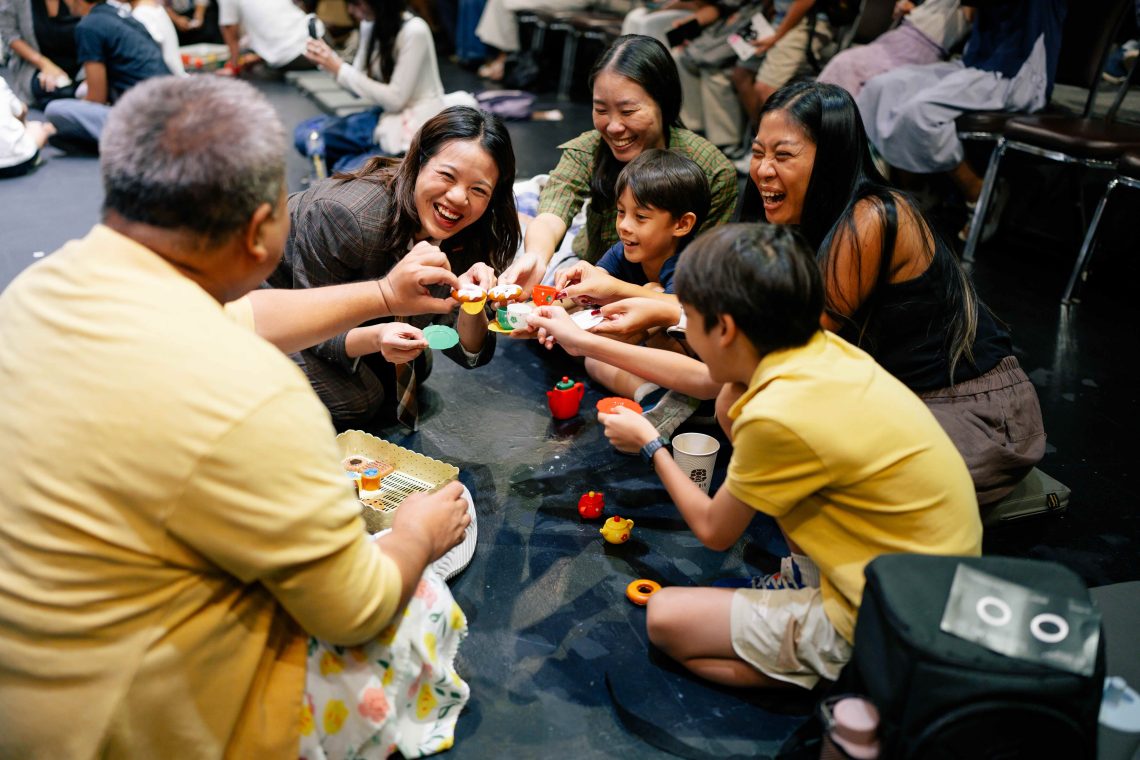
One of the performers in FROLIC shares a tea party with audience members, they each hold tiny pretend cups and saucers and cheers them together in the centre.
With the support of the incredible BICT Festival team, we were also able to incorporate Stopgap’s signature creative access practices despite having only five days to create the production. Visual stories were produced, a relaxed environment was established, and we organised the audio describer to be seated amongst blind and visually impaired children so they could interact with her and ask questions throughout the performance.
One particularly joyful moment came when visually impaired children’s entertainer Glur smashed a teacup with slapstick humour. The laughter from the visually impaired children in the audience was immediate and infectious.
Creating Meaningful Work in a Short Space of Time
Both British Council projects involved creating sharings or performances within an exceptionally short timeframe. Yet both experiences were calm, inclusive and deeply moving for everyone involved, including the Stopgap team.
Projects with such compressed creation periods do not always feel relaxed, nor do they always result in high-quality work. Over the years, however, we have refined our approach to maximise both the artistic outcomes and the impact on participants.
Preparation is key. Our Creative Learning Manager or Projects Manager often lay the foundations, helping to establish a safe environment that can also become a brave space for artists. The lead artist then joins conversations, often through online meetings, to learn about the local artists, understand their practice and share insights into our own.
We also insist, wherever possible, on creating work in the same space where it will eventually be performed. For me, this is essential. When we invite an audience into a space that has already become our home, rather than arriving somewhere unfamiliar on the day of the performance, the process naturally feels smoother. We have already spent several days settling into the environment, understanding its possibilities and building confidence within it.
Finally, we arrive with a plan, but also with an open mind. We remain responsive to whatever is in the room. Stopgap constantly reminds me as a choreographer that we already have everything, we need to create meaningful work: the people, the stories and the imagination.
Perhaps that comes from careful preparation. Perhaps it comes from having an open mind.
Most likely, it comes from both.