
Disabled artists and leaders across the sector are facing devastating cuts to their Access to Work grants, a scheme designed to help Disabled people gain and stay in employment.
Stopgap Senior Dance Artist and Choreographer Nadenh Poan has received a 58% cut to his funding, including a 62.5% cut to his support worker hours.
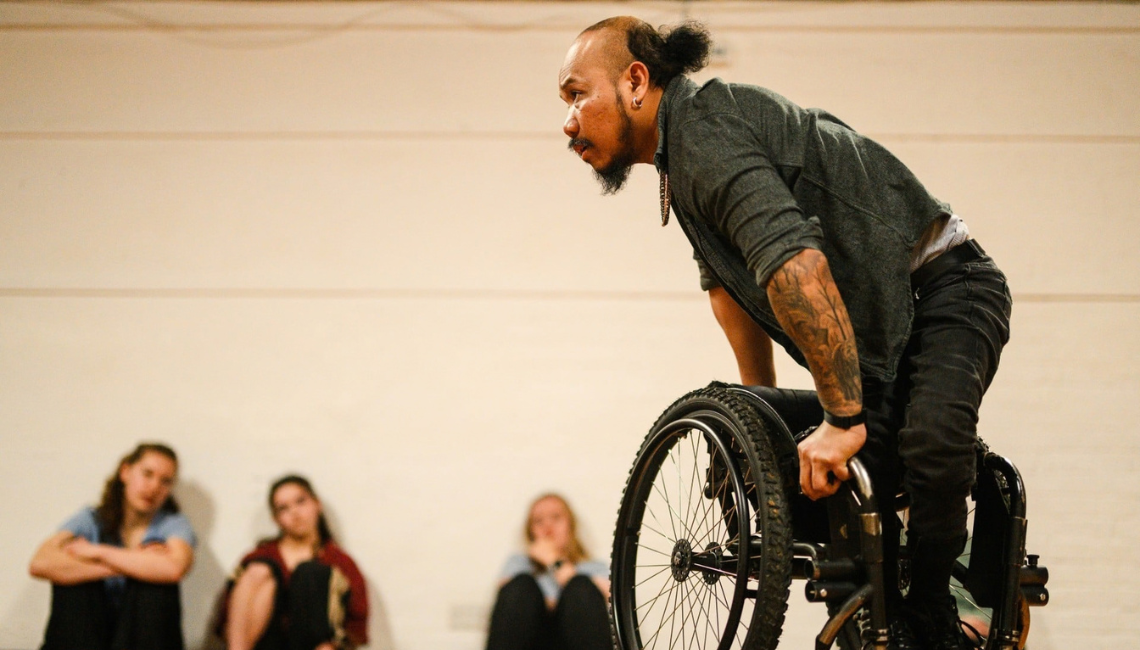
Nadenh is a British-Cambodian wheelchair dancer, he joined Stopgap in 2013 and has since evolved into a world-renowned wheelchair dancer and has most recently had his company debut as choreographer with RO-TES–រទេះ.
Access to Work is the government scheme that funds the individual support a Disabled person needs to do their job. It can cover a wide range of practical interventions beyond reasonable adjustments to help overcome workplace related barriers. As a company built on an inclusive and equitable culture, access is built into everything we do, but Access to Work enables us to level the playing field in an inaccessible world.
Stopgap champions the ideas behind Access to Work, but at present the system is under immense strain. Alongside many others we have experienced:
- Long waits for decisions
- A lack of clarity from case workers around current policy
- and inaccessible application processes
Across the sector, Disabled artists and leaders are facing detrimental cuts to their Access to Work funding. In May 2025, Touretteshero Co-Artistic Director Jess Thom revealed a 60% cut to her grant, leaving her with no choice but to pause her vital role in the organisation. In February 2026, Graeae’s Artistic Director, Jenny Sealey, had her support cut by 50%, and Graeae reported that 35 other disabled artists are facing cuts and funding delays of up to 15 months. Though some of these decisions have been overturned, allowing Disabled artists to continue their work, it has not meant an end to brutal and arbitrary actions by the Department for Work and Pensions (DWP). Now, we have most recently learned of Second Hand Dance Co-Director and Artistic Director Rosie Heafford receiving a devastating 76% reduction in her grant.
As a disability-centred company, a number of our Disabled employees have Access to Work grants, and we have not escaped these impacts either. Senior Dance Artist and choreographer Nadenh Poan’s most recent Access to Work renewal, submitted in June 2025, resulted in a 58% cut to his funding, including a 62.5% cut to his support worker hours.
Nadenh is a Senior Dance Artist and choreographer with Stopgap, he’s received Access to Work funding for 8 years. Our team supports multiple grants across the company, some requesting support for incredibly similar access needs. Despite no change in his circumstances, Nadenh’s renewal in 2025 was experienced dramatically differently to others.
What Happened
Upon submitting the renewal in June 2025, we received notice that an independent workplace assessment must take place due to them treating the renewal as a new application, despite no changes to Nadenh’s support requests or circumstances. Our first meeting with the workplace assessor went well, and we were told Nadenh’s funding would be recommended at the same level as before. The meeting with the Access to Work case manager felt very different. It was made clear that funding would be reduced regardless of what the assessment found. In that meeting, the case manager asked whether “the choreographer” could carry out certain support tasks, moments after being reminded that Nadenh is the choreographer. They also went on to refer to non-disabled people as “normal people”.
We made a complaint and appealed to change the case manager, but the reduced grant was approved in September 2025. We kept chasing for updates on the complaint and the renewal, and heard nothing for almost a year. It took Nadenh’s local MP, Alex Baker, stepping in on our behalf to get a response. Access to Work wrote to say they would reconsider his support worker hours only.
Ten days later, and before we’d even had the chance to send the evidence they asked for, a letter went to Nadenh saying the decision would not change. The reason given was that all the support he needs in his working day, including dance and choreography support, relates to personal care – which is not correct. The grant letter also left out the expenses contribution that had originally been agreed, indicating a further cut to the grant after the reconsideration.
A process full of errors
The entire process has been defined by repeated clerical, administrative and procedural errors.
Among them:
- Our initial reconsideration request was never logged.
- Alex Baker MP was told the complaint had been resolved in a phone call with a member of our staff. That call never took place.
- Nadenh’s reasonable adjustment requests for communication weren’t followed by the DWP.
- Their most recent communications refer to Nadenh as self-employed. Nadenh has been a PAYE member of staff for over 13 years.
- We were told that policy guidance had changed, when in fact there were no updates or changes communicated in the policy guidance.
- In communications, they have attempted to conflate benefits such as PIP and Motability, with Access to Work, despite them being fundamentally different kinds of support that are not workplace related.
In a response letter to local MP Alex Baker, Access to Work stated that no one is entitled to their support. Stopgap Executive producer Lucy Glover says “It is deeply concerning to read that the system itself does not believe Disabled people have an entitlement to get the support they need in order to work in an inaccessible world.”
The Impact
What this means for Nadenh and Stopgap
Nadenh now faces significant challenges that risk disrupting his daily life and work with Stopgap. Local transport is not accessible to Nadenh as a wheelchair user, so he relies on taxis. Without Access to Work funding, those costs fall to Stopgap and to Nadenh himself. During a working day, he needs an access worker for things like transferring in and out of vehicles, transporting and assembling his wheelchair, moving equipment, accessing facilities and navigating studios. With his support hours cut, the way Nadenh works will have to fundamentally change.
Nadenh performs and leads workshops around the world, helping to establish the UK as a leading and respected force in inclusive and equitable dance. This year he has toured his work RO-TES-រទេះ across the UK, following an international debut in Barcelona last year. He has performed on television and at Paralympic events, and most recently led a project in Georgia with an inclusive cast of dancers, and taught at our annual masterclass in Brighton.
He is also performing as a soloist in Lived Fiction, our award-winning production and a rallying cry for more inclusive and equitable futures. Lived Fiction has toured the UK, Singapore, Switzerland and Germany, with dates still to come in the Netherlands and Hong Kong. It has also been nominated for the Rose International Dance Prize, often described as dance’s equivalent of the Turner Prize. We are the first British company to be nominated.
None of this would be possible without Access to Work supporting his access needs.
Nadenh says:
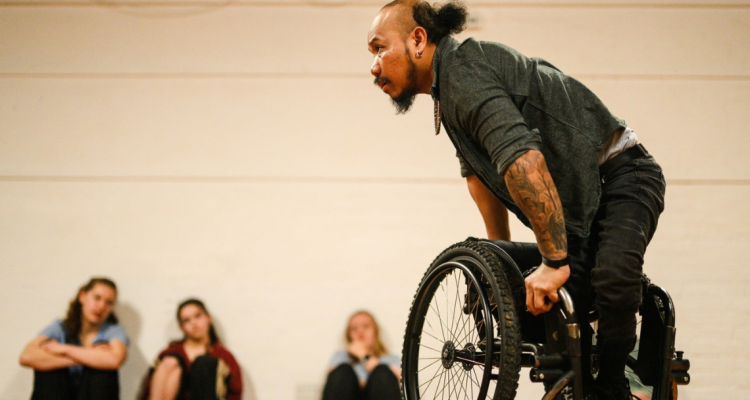
Nadenh in the studio
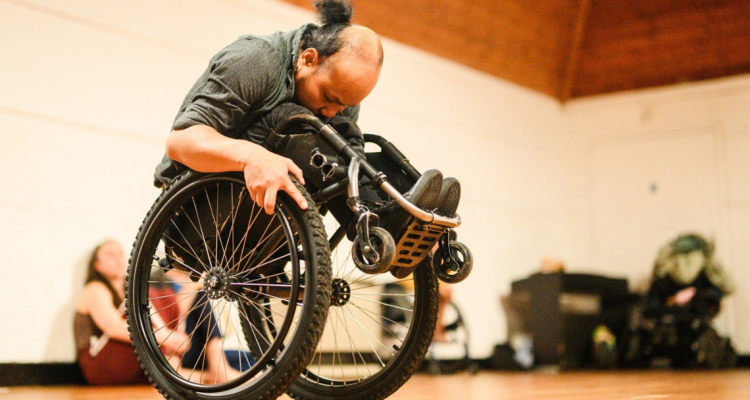
Nadenh in the studio
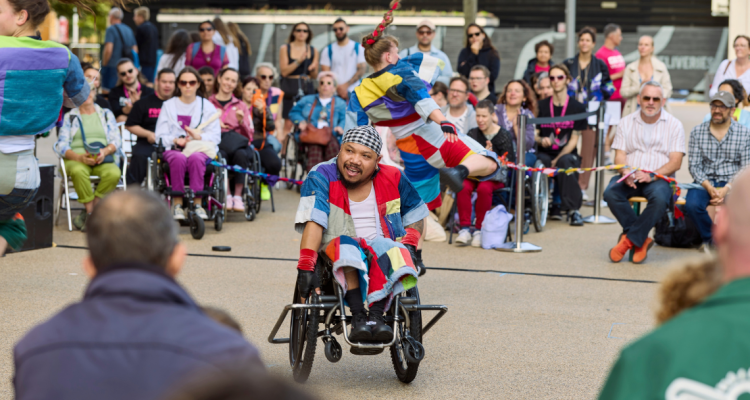
Nadenh performing in RO-TES-រទេះ, his first major commission for Stopgap
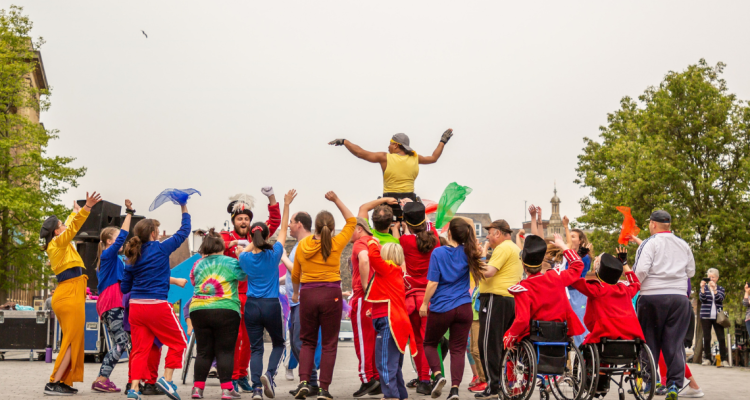
Nadenh being lifted by the Frippery cast, at Norfolk and Norwich Festival.
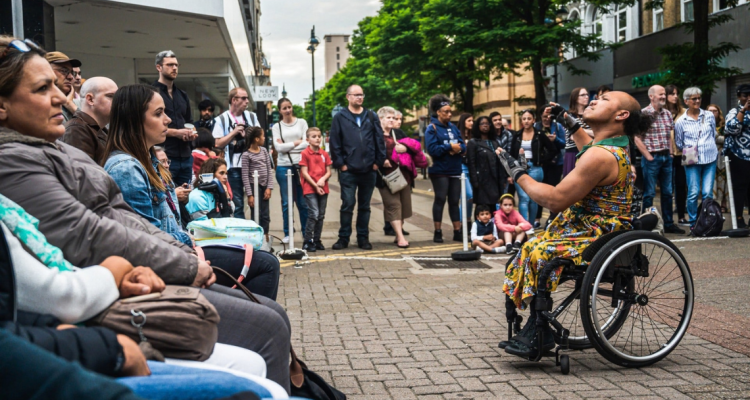
Nadenh performing in Stopgap's Frock
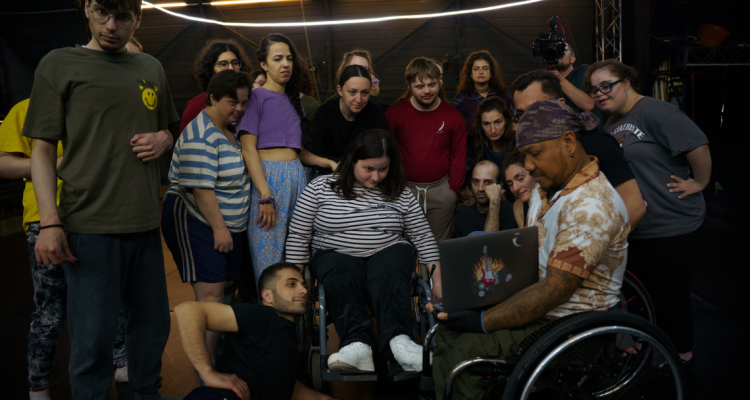
Nadenh showing a group of dancers his work RO-TES-រទេះ, as he co-leads an inclusive dance workshop in Georgia.
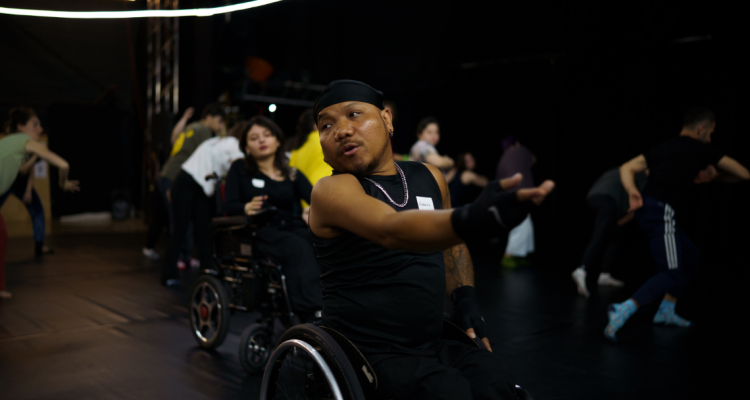
Nadenh leading class during the residency in Georgia.
For Stopgap, as an inclusive company we remain committed to supporting Nadenh to work the way he needs to. However we simply cannot afford the same level of support Access to Work afforded him. Access to Work cuts fundamentally threaten the future of our organisation and others like us. At this time Stopgap has accumulated at least £30,000 in spent access costs that historically would have been covered in full. Now this decision is final we expect to receive less than half despite no change in workplace access needs.
Alongside financial impacts, our team has spent over 195 hours, or 26 days, dealing with Nadenh’s grant from the time of our initial renewal request to now. This is time that should be spent on delivering our impactful work, and dismantling the inequities of privilege in our industry and beyond. This volume of work and unpredictability is unsustainable for an organisation of our size, and will be even more so for individual freelancers which make up almost 70% of our industry workforce.
Our Call
For Stopgap, to sustain our inclusive and equitable culture, we need Disabled artists and talent. A diverse workforce is vital to our mission of creating remarkable experiences that transform society’s perceptions of difference. With Deaf, Disabled, neurodivergent and non-disabled artists and staff, we dismantle the inequity of privilege, in dance and in all aspects of living, collaborating, and creating together as humans. Without Access to Work, countless Disabled people could disappear from the sector, a sector that needs their rich talent, expertise and voices.
Access to Work is revolutionary, but needs to be making decisions with care and consideration based on Disabled people’s actual needs.
We’re calling on our allies and supporters to help us share widely about this. Every conversation, every share, it all helps keep the momentum and focus on this important issue. As Jenny Sealey said at an Access to Work sector solidarity event earlier this year: “We need to be loud”.
What you can do
Write to your MP – This is a template to adapt and send to your MP to tell them about the situation with Access to Work.
Access To Work: Updates – Disability Arts Online – Resources from Decode, with up-to-date information and support available.